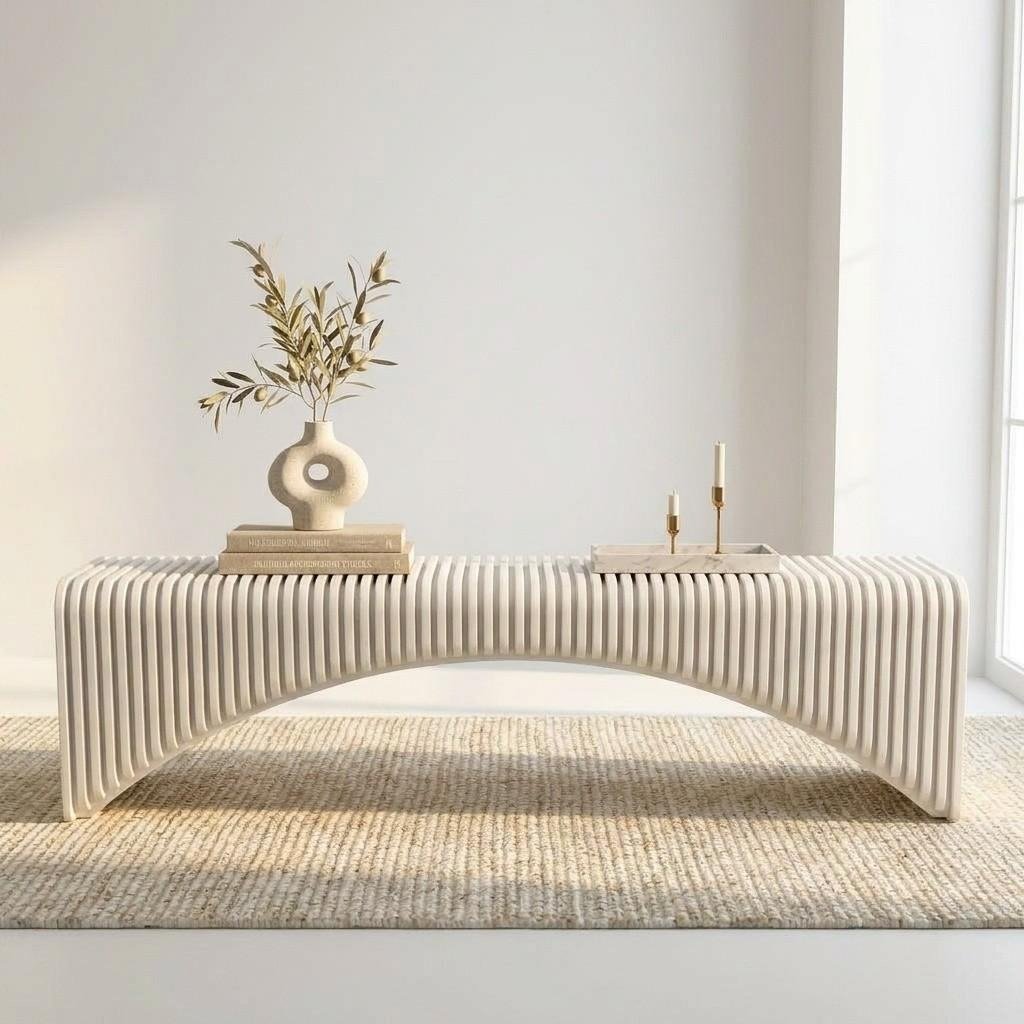
Design is no longer just about form and function—it is increasingly about data, algorithms, and adaptability. In this evolving landscape, parametric furniture has emerged as one of the most innovative directions in contemporary design. A standout example of this approach is the parametric table, a piece of furniture shaped not by fixed templates, but by adjustable parameters that define its geometry, structure, and aesthetics.
Together, these concepts represent a shift from traditional craftsmanship to computational design, where furniture becomes responsive, customizable, and highly expressive.
What is parametric furniture?
Parametric furniture refers to furniture designed using parametric modeling tools. Instead of drawing fixed shapes, designers define rules and parameters—such as dimensions, curves, load requirements, and material behavior—that generate multiple design variations.
This means a chair, shelf, or table is not a single static object but a system of possibilities.
Key characteristics of parametric furniture
- Designed using algorithmic modeling tools
- Highly customizable and adaptable
- Geometry driven by rules and parameters
- Often organic or complex in form
- Optimized for structure, comfort, or material use
Because of these features, parametric furniture is widely used in architecture studios, high-end interior design, and experimental product design.
What is a parametric table?
A parametric table is a table designed using parametric principles, where its shape, legs, surface pattern, and structure are generated through computational rules. Instead of traditional straight lines and standard proportions, a parametric table may feature flowing curves, branching structures, or lattice-like surfaces.
Each design can be adjusted by modifying parameters such as height, width, density, or load distribution.
Common features of parametric tables
- Unique geometric or organic forms
- Customizable dimensions and proportions
- Structural optimization through digital modeling
- Artistic and sculptural appearance
- Integration of function and aesthetics
The parametric table is both a functional object and a design statement.
How parametric furniture is designed
The process of creating parametric furniture involves digital tools and computational logic rather than traditional sketch-based design.
1. Defining parameters
Designers set rules such as size limits, structural needs, and aesthetic goals.
2. Algorithm creation
Using software, relationships between elements are programmed. For example, changing height may automatically adjust leg angles.
3. Digital modeling
The system generates multiple variations of parametric furniture based on inputs.
4. Simulation and testing
Structural stability, weight distribution, and usability are analyzed.
5. Fabrication
Final designs are produced using CNC machines, 3D printing, or laser cutting.
This workflow ensures that every parametric table or furniture piece is both precise and adaptable.
Why parametric furniture is becoming popular
The rise of parametric furniture is driven by advances in digital design tools and a growing demand for customization in interiors.
Key reasons for popularity
- High level of customization
- Unique, non-repetitive designs
- Efficient use of materials
- Integration of art and function
- Compatibility with modern fabrication technologies
A parametric table, for example, can be tailored to fit specific room dimensions or design themes without losing structural integrity.
Benefits of a parametric table
The parametric table is more than just a piece of furniture—it is a result of advanced design thinking.
1. Customization
Users can adjust dimensions, shape, and style based on their needs.
2. Structural efficiency
The design can optimize material usage while maintaining strength.
3. Aesthetic uniqueness
No two parametric tables need to look the same, making each piece one-of-a-kind.
4. Functional adaptability
Tables can be designed for specific uses such as dining, work, or display.
5. Design innovation
The parametric table pushes the boundaries of traditional furniture design.
Materials used in parametric furniture
Parametric furniture can be made from a variety of materials depending on design goals.
Common materials include:
- Wood (especially plywood and CNC-cut panels)
- Metal (for structural frameworks)
- Acrylic and plastics (for lightweight designs)
- Composite materials
- 3D-printed polymers
The choice of material affects the look and performance of a parametric table.
Applications of parametric furniture
Parametric furniture is used in many environments where design and innovation are important.
Residential interiors
Homeowners use parametric designs to create unique statement pieces.
Commercial spaces
Offices, hotels, and retail stores use parametric furniture for branding and identity.
Architectural installations
Design studios often create large-scale furniture installations for exhibitions.
Educational and creative spaces
Schools and studios use parametric tables for collaborative and flexible environments.
Parametric table as a design statement
A parametric table often goes beyond function and becomes a sculptural object. Its flowing geometry and intricate structure make it a centerpiece in modern interiors.
Unlike mass-produced furniture, a parametric table reflects computational creativity and design intelligence.
Technology behind parametric furniture
The development of parametric furniture relies heavily on digital tools and software.
Key technologies include:
- Rhino + Grasshopper
- Autodesk Fusion 360
- BIM-based design systems
- Generative design algorithms
- CNC machining and robotic fabrication
These tools allow designers to turn complex parametric table concepts into real-world objects with precision.
Sustainability in parametric design
Sustainability is an important advantage of parametric furniture.
Sustainable benefits include:
- Optimized material usage reduces waste
- Lightweight structures reduce resource consumption
- Locally manufactured components lower transport impact
- Digital prototyping reduces physical waste
A well-designed parametric table can achieve both beauty and environmental responsibility.
Challenges in parametric furniture design
Despite its advantages, parametric furniture also comes with challenges:
- Requires advanced software skills
- Higher initial design complexity
- Cost of digital fabrication tools
- Limited mass production efficiency
- Need for precise manufacturing
However, as technology becomes more accessible, these challenges are gradually decreasing.
Future of parametric tables and furniture
The future of parametric furniture and parametric table design is highly promising.
Emerging trends include:
- AI-assisted generative furniture design
- Mass customization at affordable costs
- Integration with smart home systems
- Sustainable bio-materials
- Fully automated fabrication processes
These innovations will make parametric tables more common in everyday interiors.
Conclusion
Parametric furniture represents a new era in design where creativity is guided by algorithms and rules rather than fixed templates. At the heart of this movement is the parametric table, a perfect example of how computation can transform a simple object into a dynamic, functional, and artistic creation.
As digital tools continue to evolve, parametric design will become even more integrated into everyday living spaces, offering personalized, efficient, and visually striking furniture for the future.