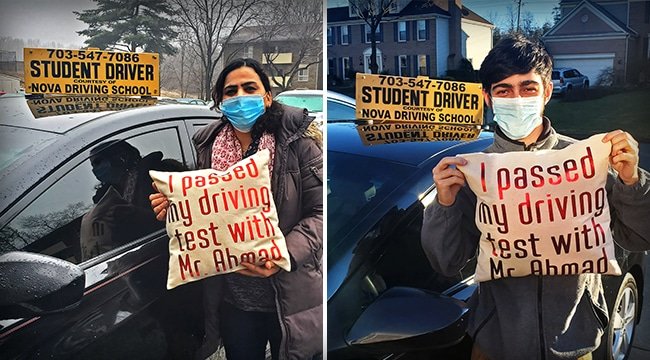
The DMV behind the wheel test is a crucial step for anyone seeking a driver’s license. Despite thorough preparation, many applicants fail this test, often due to simple yet preventable mistakes. Understanding these common errors can help new drivers feel more confident and improve their chances of passing on the first attempt. For those preparing, combining practical experience with resources like drivers ed online can provide a significant advantage.
One of the most common reasons people fail the DMV behind the wheel test is improper observation. Examiners look for drivers who continuously scan their surroundings, check mirrors frequently, and monitor blind spots. Many candidates focus solely on the road ahead, neglecting to check side mirrors or look over their shoulders when changing lanes. This oversight can lead to immediate failure, as it shows a lack of situational awareness. Drivers must remember that defensive driving starts with proper observation. Drivers ed online programs often emphasize mirror checks and blind spot monitoring, which reinforces these habits before actual driving.
Failing to obey traffic signals and signs is another frequent mistake. Stop signs, yield signs, and traffic lights are fundamental components of road safety. Applicants sometimes roll through stop signs or fail to yield when required, thinking that the DMV examiner will not notice. However, examiners are trained to observe even minor infractions. This type of error demonstrates a lack of attention to basic traffic rules, which is unacceptable during the DMV behind the wheel test. Reviewing traffic laws through drivers ed online courses can help candidates internalize the rules and avoid these costly mistakes.
Speeding or driving too slowly can also result in failure. Examiners expect applicants to maintain safe and appropriate speeds for various conditions. Driving too fast in residential areas or too slowly on highways can signal poor judgment. Speed control is more than just following the posted limits; it involves adapting to road conditions, traffic flow, and weather. Many drivers overlook this nuance, thinking that speed is a simple number. Practicing with a mentor or using drivers ed online simulations can help new drivers develop better speed judgment and maintain control throughout the test.
Improper lane usage is a frequent reason for failure during the DMV behind the wheel test. Many candidates struggle with staying centered in their lane, making turns too wide, or drifting into adjacent lanes. Lane positioning is critical for both safety and exam success. Drivers must understand how to navigate curves, intersections, and multi-lane roads without crossing boundaries. Online driving programs often provide visual demonstrations and interactive exercises to improve lane discipline, which can be invaluable before taking the real test.
Another critical mistake is failing to execute smooth and controlled maneuvers. Examiners evaluate how well a driver handles turns, parallel parking, three-point turns, and parking lot navigation. Jerky movements, abrupt stops, or inconsistent steering can indicate nervousness or lack of practice. These errors are particularly common among new drivers who have not had enough hands-on experience. Drivers ed online platforms can offer practice tips and step-by-step guidance to improve maneuvering skills, helping candidates develop muscle memory and confidence.
Misjudging gaps in traffic is a subtle yet dangerous mistake. Many applicants struggle with entering highways, merging lanes, or crossing intersections because they miscalculate distances and speeds of other vehicles. This can lead to unsafe situations, which examiners note immediately. Proper gap judgment comes from both experience and instruction. Drivers ed online programs often include scenario-based training, allowing students to learn safe timing and decision-making in a controlled environment before hitting real roads.
Failure to signal appropriately is another common issue. Signaling is a simple yet crucial aspect of communication on the road. Some drivers forget to use turn signals, use them too late, or fail to cancel them after a turn. Neglecting this basic practice signals poor driving etiquette and can result in automatic point deductions or failure. Online drivers ed courses often stress the importance of signaling in real-life scenarios, ensuring that students adopt consistent signaling habits.
Finally, nervousness and overthinking can sabotage even well-prepared drivers. Test anxiety can lead to missed cues, hesitation, or overcorrection. Many applicants know the rules but struggle to apply them under pressure. Practicing driving in real traffic conditions, combined with mock tests offered by drivers ed online programs, can help reduce anxiety. The more familiar a candidate becomes with the testing process, the more likely they are to perform calmly and efficiently.
In conclusion, the DMV behind the wheel test is challenging, but failure is often preventable. Common mistakes include poor observation, ignoring traffic signals, improper speed, lane issues, rough maneuvers, misjudged gaps, signaling errors, and test anxiety. Addressing these issues through consistent practice, real-world driving experience, and online education like drivers ed online can significantly improve performance. New drivers who commit to learning both the rules of the road and the practical skills required will not only pass the test but also develop safe driving habits for life.